

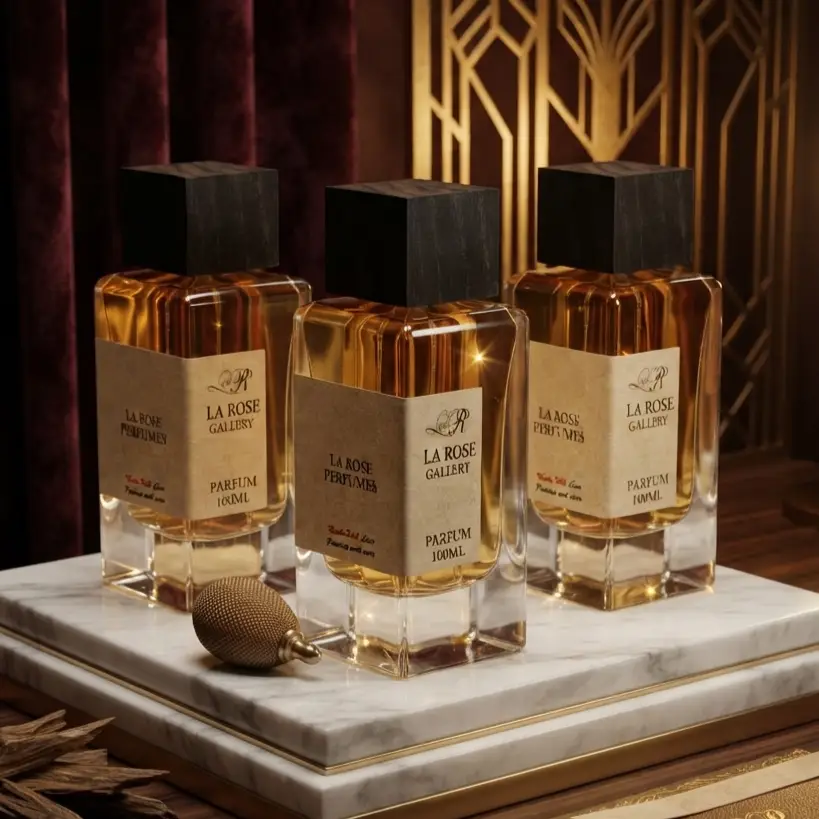
The fragrance pyramid: How is a perfume built? And how do you design a balanced, long-lasting composition

When you smell a fragrance for the first time and then smell it again two hours later, you may discover that you’re experiencing two completely different scents. This isn’t a flaw in the fragrance — it’s exactly how it was designed.
A well-crafted fragrance is built in three layers, unfolding over time in an intentional sequence. Understanding this structure is the first step that distinguishes someone who simply blends oils from someone who designs a fragrance.
The First Layer: Top Notes
They are the first notes you smell and typically last from 15 minutes to around one hour.
Characteristics: Their molecules are light and highly volatile, which is why they appear first and fade first.
Examples: Citrus notes (bergamot, lemon, orange), mint, lavender, and some light spices such as pink pepper.
Function: The first impression. It is what determines whether a customer picks up the bottle or puts it back on the shelf.
The Second Layer: Heart / Middle Notes
They emerge after the top notes fade and typically last from two to four hours, forming the true character of the fragrance.
Examples: Rose, jasmine, orange blossom, cinnamon, cardamom, and black pepper.
Function: The bridge between the fleeting top notes and the rich, heavier base. Without a strong heart, a fragrance can feel “disjointed” — it starts one way and then suddenly shifts into something completely different from the opening.
The Third Layer: Base Notes
The heaviest and slowest-evaporating layer, which can last from six hours to an entire day.
Examples: Oud, sandalwood, musk, amber, vanilla, patchouli, and leather.
Function: Longevity and depth. It’s also what lingers in the memory of those around you after you leave.
Ratios: Where Do You Start?
There is no single correct formula, but there is a classic starting point used by many perfumers:
- Top Notes: 20% – 30%
- Heart Notes: 30% – 40%
- Base note 30% – 50%
In Eastern fragrances in particular, the ratio tends to favor the base notes, which is why they are known for their long-lasting performance and deep presence.
The concentration of fragrance oil in the final product determines its classification:
| Classification | Approximate Fragrance Oil Concentration |
|---|---|
| Eau de Cologne (EDC) | 2% – 5% |
| Eau de Toilette (EDT) | 5% – 15% |
| Eau de Parfum (EDP) | 15% – 20% |
| Parfum / Extrait de Parfum | 20% – 30% |
Five Common Mistakes in Perfume Formulation
1. Using Too Many Ingredients Beginners often assume that using more oils means a richer fragrance. The opposite is true: using more than eight ingredients without sufficient experience can result in a “muddy” scent with no clear identity. Start with three to five ingredients.
2. Judging the Blend Too Quickly The formula needs a maturation period (maceration) of two to six weeks for the ingredients to blend harmoniously. The scent on the first day is not the final fragrance.
3. Neglecting Documentation If you don’t record every ratio in a notebook or file, you won’t be able to reproduce your successful formula. This is one of the most frustrating losses.
4. Testing on Paper Only Test strips are useful for initial evaluation, but a fragrance behaves very differently on the skin due to body heat and pH levels.
5. Olfactory Fatigue After testing five or six samples in a row, your nose loses its ability to distinguish between scents. Take a break, breathe some fresh air, and then come back to it.
Tools You Need to Get Started
- A Precision Digital Scale (Accurate to at Least 0.01 g)
- Pipettes and Droppers for Precise Measurement
- Dark Glass Bottles for Sample Storage
- Fragrance Testing Strips
- A Notebook or File for Recording Each Experiment by Number and Date
From Understanding to Mastery
Understanding the fragrance pyramid is an essential first step, but mastery comes through guided practice — smelling, blending, making mistakes, and learning under the guidance of those who have walked this path before you.
At LaRose Gallery We offer specialized courses in the art of perfume design, from beginner to professional level, along with everything you need, including fragrance oils, raw materials, and laboratory equipment.
Start your fragrance journey with us — contact us via WhatsApp at: 971555535625+ Or visit the Courses section in our store.