

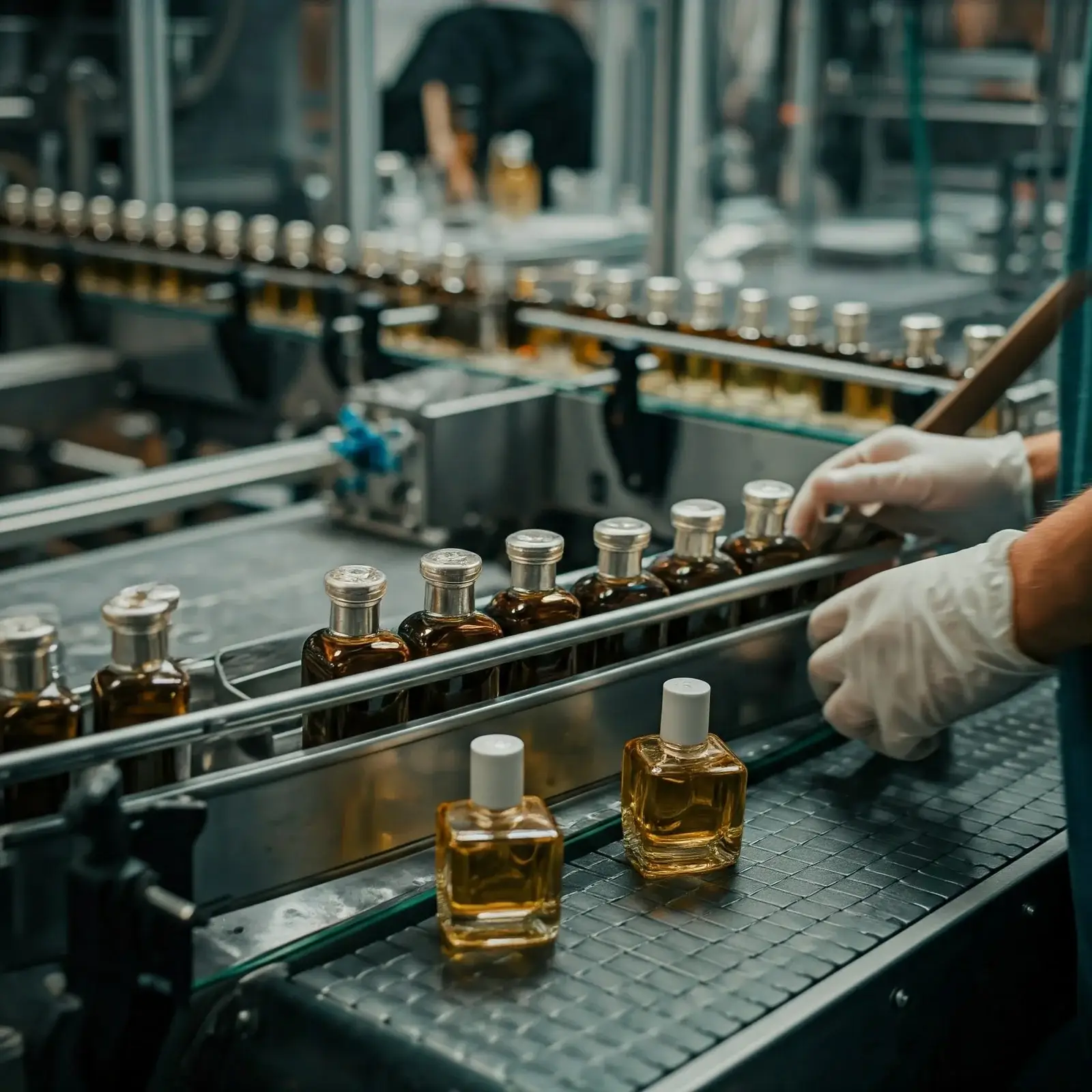
How to start your own fragrance brand project in the UAE? A practical guide from the idea to the first bottle

The fragrance market in the Gulf is not an ordinary market. Fragrance is part of everyday identity, hospitality, and both major and everyday occasions. That is precisely why launching a fragrance brand in the UAE can be a real opportunity — but it requires planning, not just enthusiasm.
In this guide, we’ll take you step by step from the initial idea to holding the first bottle bearing your name.
Step One: Define Who You’re Creating Your Fragrance For
One of the most common mistakes beginners make is trying to please everyone. A fragrance designed for everyone ultimately speaks to no one.
Ask yourself three questions before anything else:
- Who is your customer? A young customer looking for a light everyday fragrance? A woman looking for a rich, statement-making fragrance for special occasions? Or a traditional customer seeking authentic Oud oil?
- What is your price point? A fragrance priced at AED 80 requires completely different manufacturing decisions from one priced at AED 500.
- What sets you apart? The fragrance itself? The story? The design? The packaging?
Write your answers on a single page and keep it. It will serve as your reference for every decision that follows.
Step Two: Understand the Fragrance Ingredients Before Buying Them
Before working with any supplier, you need a basic understanding of what you are buying:
Fragrance Oils: The heart of the fragrance and one of its most important components. Their quality and source can vary significantly, directly affecting the fragrance’s longevity and overall quality.
Duhn oud oil One of the ingredients most closely associated with Gulf fragrance culture. Its price can vary dramatically depending on its origin, age, and extraction method.
Musk and Essential Oils: Used as base materials or to modify and balance the formula.
Alcohol and Fixatives: Help determine the final format of the fragrance — spray, oil-based, or concentrated.
An important tip: Start by purchasing small trial quantities of several oils before committing to any wholesale quantity. The difference between a fragrance in a sample and how it performs on the skin after six hours may surprise you.
Step Three: Packaging Is Not a Secondary Detail
In a store crowded with options, packaging is the first thing a customer sees — and sometimes the final factor that convinces them to buy.
There are several elements that require clear decisions:
- Bottle: Size (30 ml, 50 ml, 100 ml), shape, and glass thickness, which can contribute to a luxurious feel.
- Cap: Wooden, metal, or acrylic. A heavier cap can immediately increase the product’s perceived value.
- Pump An often-overlooked element, despite its role in determining spray quality and the everyday user experience.
- Outer Packaging: The carton, printing, and finishing.
Be sure to test the compatibility of the bottle and pump before placing a large order — incompatibility is a common and costly problem.
Step Four: Choose Between In-House Manufacturing and Working with a Manufacturing Partner
You have two paths:
Option One: Manufacture It Yourself. This gives you complete control and a lower cost per unit in the long term, but it requires investment in laboratory equipment, workspace, and time for learning and experimentation.
Option Two: Private Label Manufacturing. You work with a specialized partner who handles formulation and filling, while you focus on your brand, marketing, and sales. This is a faster route to market and involves less risk at the beginning.
For beginners, the second path is often the more practical approach: you can test the market with less capital, and if the product succeeds, you can expand later.
Step Five: Calculate Your Costs Honestly
The true cost per unit includes:
Fragrance oil + alcohol and fixatives + bottle + cap + pump + packaging + label and printing + filling cost + shipping + wastage allowance.
A practical rule: Calculate the full cost, then add 15% as a safety margin before setting your selling price. Projects often fail not because of the product itself, but because the pricing does not account for the small details.
Step Six: Learn Before You Spend
Before investing in large quantities, invest in knowledge. Understanding the fragrance pyramid, blending ratios, and how ingredients behave over time can save you from costly mistakes later. Specialized perfume design courses can save you months of trial and error.
Start from One Place
The most difficult part of starting a fragrance business is not any single step, but having to deal with ten different suppliers for oils, bottles, caps, and equipment.
At LaRose Gallery we provide everything a fragrance business needs under one roof: wholesale fragrance oils, Oud oil and musk, bottles, caps and pumps, manufacturing equipment and materials, private-label manufacturing services, and specialized educational courses.
Contact us via WhatsApp at 971555535625+ or by phone at 97165562611+ and we’ll help you determine the next suitable step for your fragrance business.